

Lindisfarne, TAS
Lagom House
Project Completed: 2026
- FEATURED PRODUCTSThe Sunbaker
DESIGNER
This Vacant SpaceBUILDER
Nicholas Elliot BuildingPHOTOGRAPHER
Anjie BlairSECTOR
Residential


Lagom is the measure of enough. Not minimalism, which removes warmth in the name of order, but a deeper discipline: the recognition that a room with what it needs, and nothing more, tends to feel more complete than one that has been given too much.
This was the frame This Vacant Space brought to a 1950s riverside cottage in Lindisfarne, Hobart. The brief asked for more natural light, a more functional kitchen, defined spaces and generous storage. More floor area was not part of it. "We don't believe good design comes from adding more, but from being really intentional about where you invest," says Kate Moss, creative director of This Vacant Space. The floor plan was reconfigured rather than extended, with dead ends removed and openings enlarged to face the River Derwent and the mountains beyond.


Materials were chosen with the same intention. For Kate, materiality is a design tool rather than a decorative layer, concerned less with selecting beautiful finishes in isolation than with choosing surfaces that carry the story of a home and support the way people live within it.
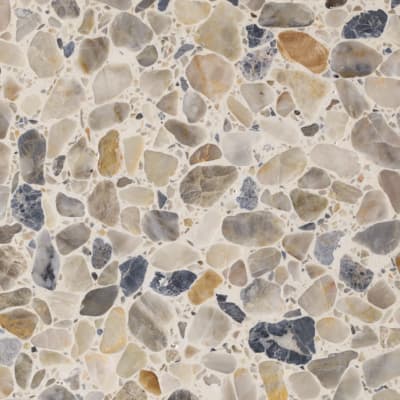
The Sunbaker was specified for the flooring: a neutral base, warm organic shapes scattered through it, the character of a material formed through natural process rather than assembled around a trend. It brought a subtle contemporary edge to the 1950s bones of the house without asserting itself. In a home guided by enough, it is a material that contributes without assertion.
The restraint of the palette also allowed the home's original elements to remain present. "Those practical and sustainable outcomes," Kate observes, "are often a natural result of a considered design approach, rather than the starting point."
A philosophy of restraint and the materials it chooses tend to find each other. The Sunbaker, warm and honest, holds that ground.

Stay in touch
Be the first to know what's going on in our world, including our latest news, exciting new projects and product information.



